
COMMERCIAL CLEANING FOR RAILROADS · 24/7 SERVICE
RAILROAD CLEANING SERVICES FOR YARDS, SHOPS,AND RAIL FACILITIES
eRailSafe-badged janitorial crews for railyards, locomotive shops, depots, and field offices.
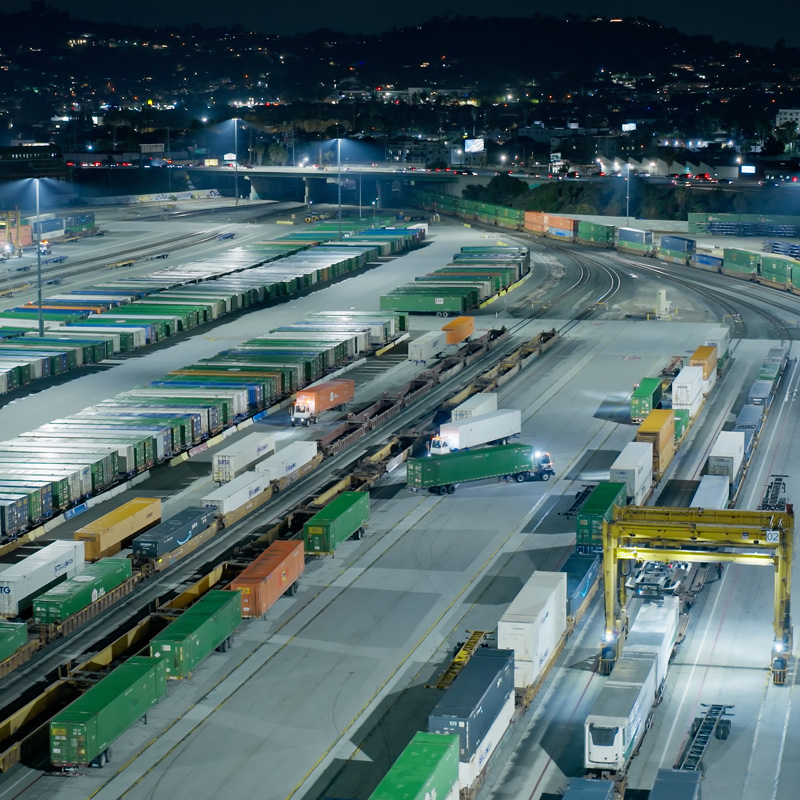
Railroad cleaning covers a campus, not a building. One rail property can includea general yard office staffed around the clock, diesel locomotive and rail shopscarrying oil and metal fines, work equipment shops, administrative buildings,locker and lunch rooms running on multiple shifts, and depots open to the public— plus a scatter of smaller field offices well away from the hub.
All of it sits behind the same gate. Contractor personnel have to be credentialedbefore they set foot on railroad property, and that single requirement shapes theschedule, the staffing, and the price.
Mid City Cleaning Contractors has maintained commercial and industrial facilitiesfor 60+ years. We build railroad programs around the two things that govern thework: your credentialing requirements and your shift schedule.
BEFORE THE FIRST SHIFT
RAILROAD ACCESS STARTS WITH CREDENTIALING, NOT WITH THE CLEANING CART
HUB VS. FIELD
Central Hub vs. Field Offices:
What Actually Changes
Rail operations are not one building. They are a hub plus a scatter of smaller offices, and the two need different programs. Pricing them the same way is how scope disputes start. Although field offices are not as large a footprint as a central hub, they do require reliable and consistent cleaning.
FACILITY TYPES
RAILROAD
FACILITIES WE CLEAN
01
GENERAL YARD OFFICE
Continuously staffed, heavy foot traffic in and out of the yard, and everything the yard carries tracked in with it.
02
LOCKER AND LUNCH ROOMS
The highest-turnover spaces on the property, and the ones most oftenunderscoped. Detailed below.
03
DIESEL LOCOMOTIVE SHOPS
Oil, brake dust, and metal fines, inspection pits, and floor contamination that defeats ordinary mopping.
04
RAIL SHOPS
Production-driven access windows shop floors, and the offices attached to them.
05
WORK EQUIPMENT SHOPS
Maintenance-of-way equipment and the seasonal swings in activity that come with it.
06
DISPATCH AND SIGNAL BUILDINGS
Occupied around the clock, electronics-dense, and sensitive to dust.
07
ADMINISTRATIVE BUILDINGS
Conventional interiors on an operating rail property. The easiest scope to add once a crew is badged, and the most commonly missed in a bid.
08
DEPOTS AND STATIONS
Public-facing, judged by passengers rather than staff, on arrival-driven schedules.
SCOPE OF WORK
WHAT A RAILROAD CLEANING PROGRAM INCLUDES
THE HARDEST ROOMS ON SITE
LOCKER AND LUNCH ROOMS

Multi-shift use means no quiet window. Crews are reporting, eating, and changing around the clock, so the program works around shift changes instead of waiting for an empty room.
Multiple cleanings per day, not one. A single daily pass fails these rooms by mid-afternoon. We scope them at the frequency the traffic actually requires.
03 · FLOORS
Routine machine scrubbing, not mopping. These floors take tracked-in contamination continuously. Scheduled scrubbing holds the finish and keeps the floor safe; mopping redistributes the film.
RESTROOMS, SHOWERS, AND OCCUPIED SPACES
Restrooms and shower facilities — cycle cleaning tied to shift patterns rather than a fixed clock, plus descaling, stocking, and odor control.
High-touch disinfection — door hardware, handrails, keypads, lockers, and break room surfaces, using EPA-registered products at labeled dwell time.
Offices, dispatch, and crew rooms — scheduledaround occupancy rather than against it, includingcontinuously staffed spaces that never fully empty
FLOOR CARE AND SHOP SURFACES
Shop floors are the clearest evidence of whether acleaning program is working, and the hardestsurfaces to maintain without interrupting production.Our floor work runs on a routine schedule ratherthan on complaint.
Machine scrubbing and auto-scrubbing — shopbays, locker rooms, and circulation areas on aset interval.
Hard floor maintenance — VCT strip and refinish,polishing, and shop concrete degreasing.
Scheduled refinishing for high-traffic areas —planned around operating hours instead of reactingto wear.
Carpet cleaning without closing the floor —routine carpet extraction extends the life of thecarpets and freshens the smell of the facility.
EXTERIOR AND SPECIALTY WORK
Pressure washing — building exteriors, entryareas, and hard exterior surfaces around shops,scoped so wash water stays inside the facility’sstormwater plan rather than creating an exposure.
Window cleaning — interior and exteriorglass on offices, depots, dispatch, and shopbuildings, including sightline-critical glass inoperational spaces.

COMPLIANCE
COMPLIANCE, SAFETY,AND DOCUMENTATION
Railroad contracts are audited contracts. What separates vendors is whether the work can be proven.
THREE PARTS OF THE REGULATORY STACK SHAPE THE SCOPE DIRECTLY:
Federal Railroad Administration — 49 CFR Part 229
OSHA — 29 CFR 1910
Yard offices, shops, crew rooms, and locker facilities are ordinary workplaces with ordinary obligations for sanitation, walking-working surfaces, and housekeeping.
Industrial stormwater
Rail transportation facilities fall under the land transportation sector of the EPAMulti-Sector General Permit, and facilities with vehicle maintenance or equipment cleaning are a regulated industrial activity. What gets washed outdoors, and where the water goes, is a permit matter — so we scope exterior work in coordination with your environmental staff.
Personnel vetting on all staff, with eRailSafe screening and badging for railroad property.
OSHA-aligned safety practices, including bloodborne pathogen response and hearing protection in shop environments.
EPA-registered chemistry applied to labels, with safety data sheets on site.
Software-based quality control — inspections logged against a written standard, with reporting available to the facility.
Consistent assigned crews, because badged personnel are a fixed asset and turnover is expensive.
Day, night, and weekend coverage, because rail facilities do not close and the program cannot assume a nine-to-five window.
FROM SITE WALK TO FULL COVERAGE
HOW A RAILROAD CONTRACT GETS STOOD UP
SITE WALK AND SCOPE DEFINITION
Mapped building by building, and separated into hub and field sites, because that determines staffing and price.Square footage alone will not produce an accurate bid.
STEP 2
CREDENTIALING PACKAGE SUBMITTED
With screening started immediately rather than after contract paperwork clears.
SCREENING,
TRAINING, AND TESTING IN PROCESS
Each railroad sets its own approval window, and this step is outside any vendor’s control.
BADGE ISSUE AND PROPERTY ACCESS
FULL COVERAGE
With quality inspections on their contracted interval and reporting from the first month.
Frequently Asked Questions (FAQs)
Do cleaning crews need an eRailSafe badge to work on railroad property?
How long does credentialing take?
What does a railroad cleaning program actually cover?
How often should locker and lunch rooms be cleaned at a rail facility?
Can one contractor cover the hub and the field offices?
Do you clean railcar interiors?
Are railyards regulated for stormwater when equipment is cleaned outdoors?
How do I know the work was actually done?
REQUEST A RAILROAD CLEANING QUOTE
MID CITY CLEANING CONTRACTORS · 24/7 SERVICE
Call 763-571-9056 or request a free estimate.